2026-03-29 – Episode 4 – Ghosts of the Livermore Asylum and Other Terrifying Tales Transcript
[spreaker type=player title=”Episode 6 – Ghosts of the Asylum and Other Terrifying Tales” resource=”episode_id=70999216″ width=”100%” height=”200px” theme=”dark” playlist=”false” playlist-continuous=”false” chapters-image=”true” episode-image-position=”right” hide-logo=”false” hide-likes=”false” hide-comments=”false” hide-sharing=”false” hide-download=”true” color=”00d084″]
Intro
Welcome to Spooky Boo’s Scary Story Time. Today I have for you several spooky, scary stories about ghosts These stories are by anonymous people on the internet. If you would like to send your anonymous story in, please visit my website at www.scarystorytime.com and click on SUBMIT YOUR STORY.
Now let’s begin…
Story One
I was thirty years old the night the memory came back so hard it felt like I was in a different frequency. I was sitting alone in my apartment in Livermore, the rain was so heavy outside I could barely see the light across the street through the window. A half-empty bottle of whiskey sat on the coffee table, but I wasn’t drunk yet. Just tired. Tired of pretending the scar on my left side didn’t ache every time I turned too fast. Tired of the way my phone still lit up sometimes with old group chats from people who didn’t know what really happened that summer when I was nineteen.
It was back a few years ago. I was home from community college for the break, working nights at the auto parts store and lying to everyone about everything. My girlfriend Emily and I had been together since junior year of high school. She was sweet in that small-town way—dark hair always smelling like vanilla shampoo, always saving me the last slice of pizza. I told her I loved her every night on the phone but always refused to get married. She hated that. Then I’d hang up and text Sarah.
Sarah was the girl who worked the register with me. Blond, loud, the kind of trouble that made you feel alive for five minutes. We’d been sneaking around for three weeks. Nothing serious, I kept telling myself. Just fun. Just something to kill the boredom before I went back to school.
That Friday night Emily had texted me she was having a sleepover with her friends at her parents’ house. “Girls only,” she wrote, with a little laughing emoji. I was supposed to be at work until midnight, but I got off early and figured I’d swing by, surprise her, maybe steal a kiss on the porch before heading to Sarah’s place. The house was dark except for the basement window. A weird orange glow flickered behind the curtains. I let myself in with the key Emily’s mom had given me months ago and crept down the stairs.
The basement smelled like melted wax and something metallic, like blood on a hot skillet. Candles—dozens of them—were everywhere: on the coffee table, the TV stand, the shelves of board games. Their flames danced like they were alive and nervous. Emily and three of her friends sat cross-legged on the carpet around the old Ouija board her grandma had left behind. Their fingers rested lightly on the planchette, a cheap plastic heart that looked ridiculous in the candlelight.
I almost laughed. Almost. Then I saw Emily’s face.
Her head was tilted back, eyes rolled so far up that only the whites showed. The veins in her neck stood out like cords. Her mouth hung open a little, breath coming in short, wet gasps. The other girls were whispering, giggling at first, but their voices had gone thin.
“Emily?” I said.
Her head snapped forward so fast I heard her neck pop. Those blank white eyes found me instantly, like she’d been waiting. The planchette shot across the board and stopped dead on the word YES.
“You’re going to be in an accident tomorrow,” she said. Her voice wasn’t hers. It was deeper, flat, like it came from the bottom of a well. “When you’re taking home the girl you’re cheating on me with.”
The room went still. The candles didn’t flicker—they just died. Every single one of them snuffed out at once, like someone had pinched them between invisible fingers. Wax smoke curled up in the sudden dark. The girls screamed. One of them knocked over a candle holder trying to get up. They scrambled for the stairs, shoving past me, voices cracking with panic. I stood there frozen, heart hammering so hard I could feel it in my teeth.
Emily’s body folded like someone cut her strings. She collapsed sideways onto the carpet, eyes fluttering shut. I dropped to my knees and scooped her up. She weighed nothing. Her skin was cold and clammy, like she’d been dead for hours and was just now pretending to be alive again. I carried her upstairs, laid her on the couch in the living room, and pulled a blanket over her. Her parents were out at some dinner party; I didn’t call them. I just sat on the edge of the couch for ten minutes watching her breathe until the color came back into her cheeks. Then I left. I didn’t even lock the door behind me.
I drove home shaking. The whole way I kept telling myself it was a prank. Emily had heard something about Sarah. Or one of the girls had seen us. They’d staged the whole thing to scare me straight. That had to be it. Ouija boards don’t work. They’re cardboard and plastic and teenage boredom.
The next morning I woke up to a text from Emily. “Last night was so fun! Sorry if I passed out early lol. Come over later?” No mention of the basement. No mention of cheating. No mention of anything. I felt this sick wave of relief roll through me. Whatever game they’d been playing, it hadn’t stuck. She didn’t remember. I could still fix this. I could break things off with Sarah quietly, be a better boyfriend, and never speak of last night again.
I picked Sarah up at her apartment around six. She was wearing cutoff shorts and a tank top, laughing about something stupid from work. I told her I was taking her home after we grabbed food. She leaned over and kissed my neck while I drove. I felt dirty and electric at the same time. We were three blocks from her place when the truck ran the red light.
I remember the sound more than anything—the wet crunch of metal folding like paper. The world spun. Glass exploded across my lap. Sarah screamed once, high and short, and then she was quiet. The truck had slammed into the passenger side at forty miles an hour. The door caved in so deep it pinned her against me. I blacked out for a second, maybe two.
When I came to, sirens were already wailing. Blood was everywhere—mine, hers, I couldn’t tell. My left leg was shattered. Something sharp had sliced through my side, nicking a kidney. Sarah’s head lolled against my shoulder at an angle that wasn’t human. Her eyes were open, but she wasn’t seeing anything anymore.
They cut me out of the car with the Jaws of Life. I spent six months in rehab learning how to walk again. Physical therapy every day, nightmares every night. Emily came to visit twice. The first time she held my hand and cried and told me how sorry she was about Sarah, how awful it was that I’d lost a “friend” in the crash. The second time she brought flowers and sat on the edge of my hospital bed and asked why Sarah’s lipstick had been on my collar when they pulled us out.
She’d found out. Of course she had. The cops, the paramedics, the gossip in our shitty little town—everyone knew. Emily looked at me with the same flat, empty eyes she’d had in the basement and said, “I hope it was worth it,” then walked out. That was the last time I ever spoke to her.
I’m thirty now. The scar on my side still pulls when the weather turns. Sometimes, late at night, I catch myself staring at the wall like I’m waiting for candles to light themselves. I never touch Ouija boards. I don’t even play with coasters if they’re shaped like hearts. I tell myself it was coincidence. A bored teenager with a dramatic flair, a truck driver who’d had one too many.
But some nights, when the rain sounds exactly like it did on that basement window, I hear her voice again—deep, certain, coming from somewhere that isn’t her.
“You’re going to be in an accident tomorrow.”
I wonder if she ever remembered. I wonder if she’s out there somewhere, older, living a normal life, or if part of her is still down in that basement with her eyes rolled back, waiting for the next idiot who thinks he can get away with something.
I pour another drink and watch the rain. The bottle’s almost empty. Outside, a pair of headlights sweeps across the wet street, slow and careful. For a second I think it’s the same truck, circling back after all these years. Then it turns the corner and disappears.
I close my eyes. I don’t sleep much anymore. But when I do, I dream of candles going out all at once, and hear a plastic heart sliding across the board to spell out the only word that ever mattered.
YES.
Story Two
Marara Tale by HoFo
The Marara —
They sent us fifteen hundred miles from home. Into an ocean that forgets men.
We were the crew of the Sassafras — a weathered cutter, not built for legends. But dragged into one all the same.
And there she was.
The Marara.
Not sailing. Not sinking. Just waiting.
She rose and fell with the swell — but not like a living ship. She lagged, as if the sea itself rejected her weight. Her mast was snapped. Her rigging hung like the ribs of something picked clean. No flag. No voice. No plea for help.
Only silence. The kind that dares you to break it.
We had been at sea too long. Provisions low. Tempers shorter. And God help us — we were out of cigarettes. You don’t know desperation until you’ve watched grown men — Coast Guardsmen — tearing open emergency rations not for food. For smokes. Survival kit, they called it. Turns out survival meant nicotine.
We came alongside that ghost of a vessel, and even the wind stepped back. No birds circled her. No waves slapped her hull. The ocean itself seemed to say: not this one.
“Board her.”
Of course we did. Because that’s what men do — step forward even when something ancient in our bones says don’t.
The hatch fought us. Swollen, sealed, like it didn’t want to be opened again. When it gave, the breath that escaped was wrong. Not rot. Not death. Something older. Something with the smell of a clock that had simply stopped.
Inside, time had stopped mid-thought. A cup left behind. Charts abandoned. A life interrupted. No storm chaos. No struggle. Just absence.
Then the engine room.
We went down with lights cutting through the dark — and the dark did not retreat. It clung.
Then we heard it. Before we saw anything. A dry, papery rustling — everywhere at once. The flashlight beam caught the walls moving. Not the ship. The walls. Thousands of them. Cockroaches, layered so thick the metal beneath had disappeared. They covered the pipes, the gauges, the floor. They covered him.
And there we found him. Or what remained.
Not a man anymore. Just bone, wrapped in the memory of one — and a living coat of things that had made him their home. Folded into that space like he had crawled there to escape. We didn’t linger to ask from what.
Nobody spoke. Nobody needed to.
As we backed out the skull rolled across the deck as the sea swell was changing. We secured the hatch. Left everything exactly as we found it — because some things don’t need to be disturbed twice.
Back on deck, the air felt heavier. Like we had taken something with us. Or something had noticed us.
The systems told a strange story. Fuel still in her veins. Batteries dead as the man below. A ship that could have lived. But didn’t.
“Tow her,” someone said. No heroics. We would drag this corpse across the Pacific and be done with it.
But the sea was not done with us.
By day three, she was following too well. A dead boat should wander, yaw, fight the line. Not the Marara. She tracked us straight and true — like she wanted to come home.
At night the towline sang. A low, strained hum, like a voice stretched across miles of black water. Some men saw a shadow cross her deck where no one stood. A hatch opening — slowly, patiently — on its own.
We told ourselves it was exhaustion. Hunger. Nicotine withdrawal.
We dug back into the emergency kits and found a few crushed smokes tucked between flares and rations. We lit them like kings. And for a moment, we felt human again.
But every time we looked back, she was there. Closer than before.
When we finally reached Honolulu, she looked smaller. Quieter. Like whatever had filled her had thinned out. Or spread.
We handed her over. Filed reports. Checked boxes. We did our duty.
But some of us never forgot the feeling — out there in that endless blue grave — that we had not found a drifting vessel.
We had interrupted something. Something patient. Something that had waited six months in silence and did not mind waiting longer.
The men who were there — the ones who still wake up staring into the dark — they’ll tell you the truth. Not loudly. Not proudly. Quietly. Like a confession.
The Marara wasn’t trying to be rescued.
She was trying to come back.
Story number 3
An Anonymous Story in Livermore
I still get chills thinking about that night in December, back when we were young and reckless enough to chase a party across the Bay. My name is Elena, and this happened years ago, but the memory clings to me like that fog that swallowed us whole.
We’d driven over from San Francisco—me, me, my roommate Sarah, her boyfriend Mike, and our friend Josh—in my beat-up old Honda. Someone had texted Sarah about a massive house party off L Street and College Avenue in Livermore. “You can’t miss it,” the message said. “Big crowd, college kids everywhere.” We had the general area but no exact address, so we figured we’d just cruise around until we spotted the lights and the cars.
It was a cold, damp night, typical for the month, and as we turned onto L Street, the fog rolled in thick and sudden, like someone had dropped a heavy gray blanket over the whole town. We laughed at first, blasting music and squinting through the windshield, teasing each other about getting lost on the way to a party. “Classic Livermore,” Mike joked. But the fog kept getting denser, swallowing streetlights and houses until we could barely see ten feet ahead.
We drove slowly, tires hissing on the wet pavement, searching for any sign of life—red solo cups on lawns, thumping bass, clusters of people our age. But there was othing. The streets felt wrong, twisting in ways I didn’t remember from the map. Then, without warning, the fog lifted as quickly as it had come in.
Everything had changed.
The modern houses, the apartment complexes, the cars we’d passed earlier—they were gone. In their place stood wide, tree-lined streets with big, boxy automobiles from another era: chrome-heavy Fords and Chevrolets, tail fins gleaming under old-fashioned streetlamps. The buildings looked decades older, like something out of a black-and-white photograph. We stared in stunned silence as I eased the car to the curb and killed the engine.
“What the hell?” Sarah whispered.
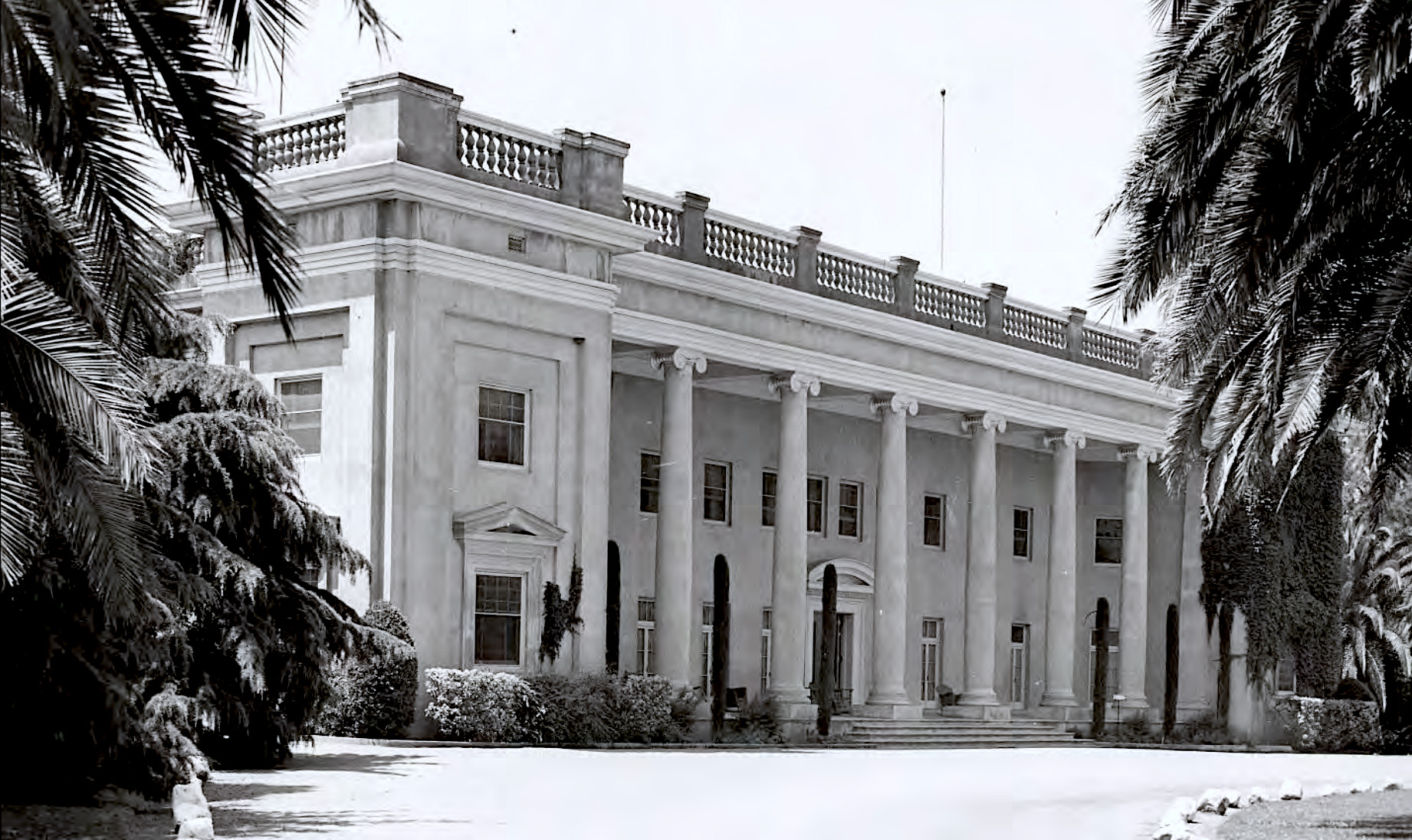
Up ahead, dominating the end of the block, was this enormous building that looked like a giant Southern plantation house transplanted to California—white columns, wide verandas, sprawling wings that seemed to go on forever. Tall palm trees lined the long driveway leading up to it, their fronds swaying gently in a breeze that hadn’t been there a minute ago.
In the distance, faint but unmistakable, we heard a woman crying. Soft, heartbroken sobs that echoed through the still night air. We couldn’t pinpoint where it was coming from—it seemed to drift from everywhere and nowhere at once.
Curiosity got the better of us. We climbed out of the car, our breath fogging in the suddenly sharper cold, and started walking up the palm-lined pathway toward the building. The air grew icy with every step, biting through our jackets. The crying grew louder, more desperate.
Then the wind picked up—sharp, whipping gusts that felt like cold fingers dragging across our skin. We huddled together, arms linked, trying to stay warm and steady. That’s when the force hit us: an invisible pull, strong and insistent, dragging us forward along the path. We stumbled toward the building, our hearts hammering.
As we got closer, we saw them—people being wheeled along the wide porches and pathways in old-fashioned wheelchairs. Dozens of them. Most looked barely alive: shriveled, dried-up bodies with sunken eyes and skin stretched tight over bones like living skeletons. They stared blankly ahead, mouths slack and open.
The nurses pushing the chairs turned toward us in unison. They smiled—wide, unnatural grins that revealed sharp, rotting teeth, yellowed and black at the gums. Their uniforms were crisp and white, but their eyes were hollow and dead.
One of the guys—Josh—panicked first. “Screw this!” he shouted, breaking away and bolting back toward the car. Sarah and Mike followed immediately, yelling for me to run. I turned to go with them, but my foot caught on something uneven in the path. I tripped hard, scraping my palms on the cold pavement.
Before I could push myself up, a ghostly hand clamped around my wrist—ice-cold, impossibly strong—and yanked me to my feet. I found myself staring into the decaying face of one of the nurses. Her skin was mottled gray and peeling, lips pulled back from those rotting teeth in a grotesque smile. Her breath washed over me, thick with the stench of death and decay, like an open grave.
I screamed, but no sound came out. The world spun, darkness rushing in at the edges of my vision. I felt myself falling…
Then everything shattered.
The grand building, the palm trees, the wheelchairs, the nurses—they all dissolved like smoke in the wind. The fog was gone. The modern streetlights flickered back on. The 1950s cars vanished, replaced by the familiar shapes of our own time.
Sarah and Mike were shaking me, helping me to my feet. “Elena! Elena, come on!” Their voices sounded far away at first, then sharp and real.
I was back on L Street in Livermore, December cold nipping at my face, my car parked exactly where we’d left it. No plantation house. No crying woman. No rotting smiles.
We didn’t say much on the drive back to San Francisco. Josh kept glancing in the rearview mirror like he expected something to follow us. Sarah held my hand the whole way, her fingers were trembling.
We never went back to Livermore. Not once. Even now, years later, if someone mentions the name, I feel that cold wind on my skin and smell death on the breath of something that should never have been there.
Whatever we drove into that night… it never really let us go.
Thank you for listening. If you enjoyed this episode, please make a comment and tell your friends on just about any social media. You can find me at spookybooscarystorytime or 707SPOOKYB. Please remember that you can always turn in your own stories. Visit the website at www.scarystorytime.com and use the submission form. I can’t wait to tell yours!
That’s all of tonight. I’ll see you in your nightmares!